
Questions about dental implants in Torrevieja?
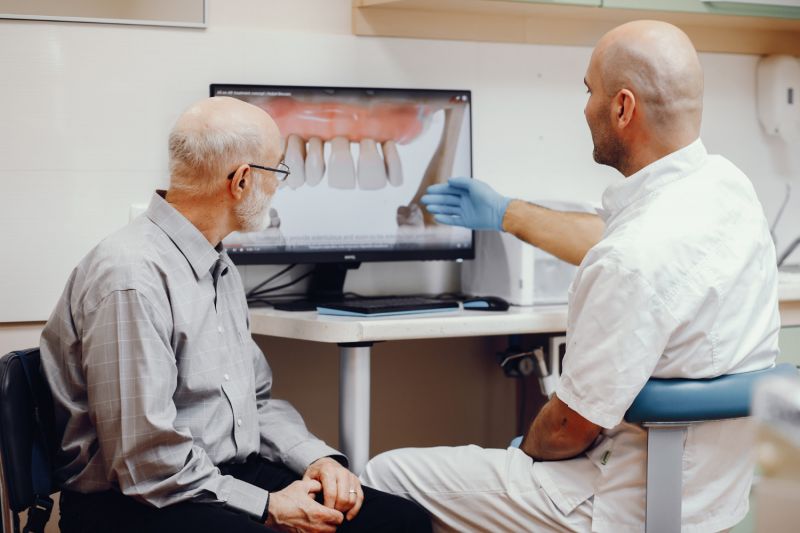
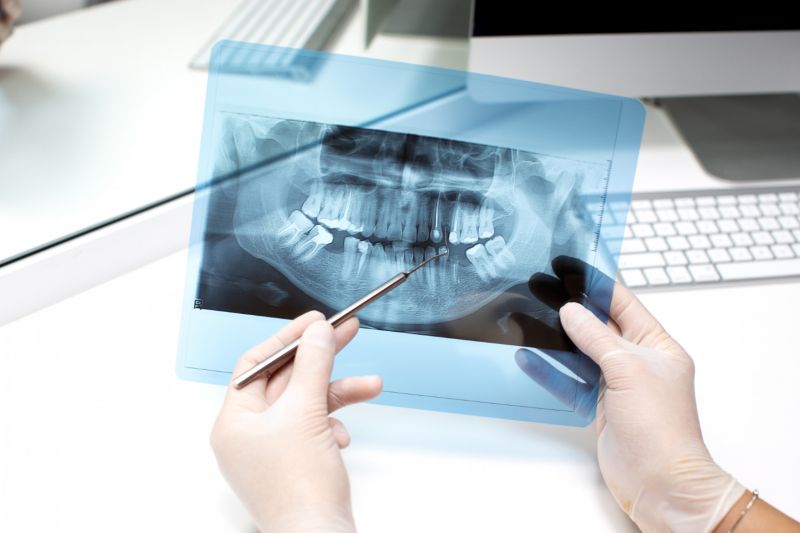
At AP-Denta, we assess your case during the first visit with a digital scanner and a panoramic X-ray. We see patients in Russian, Spanish, and English — no waiting lines.
Write to us on WhatsApp: +(34) 638 893 141
Torrevieja, Pasaje País Vasco, edificio 1, local 4
apdenta@gmail.com · Mon–Fri 10:00–20:00, Sat–Sun — closed
A dental implant is an artificial root made of titanium or zirconium dioxide that is placed into the jawbone and serves as a foundation for a crown or a fixed prosthesis. It replaces a missing tooth both functionally and aesthetically, and most importantly, it slows down the bone loss that inevitably occurs when a gap is left empty. The process from placement to the permanent crown takes 3 to 6 months; in some cases with immediate loading, the crown is placed on the day of the surgery. According to the International Team for Implantology (ITI), implant success rates at 10 years are 95–98%. At AP-Denta, Torrevieja, the indication assessment is done during the first visit.
What an implant can do that a removable denture cannot
The difference between an implant and a removable denture is not only aesthetic but also biological. When a tooth is lost, the alveolar bone that held its root no longer receives chewing stimulation and begins to resorb: within the first year, 25 to 40% of its volume is lost. An implant transfers load to the bone just like a natural root did, and this process is halted. A removable denture rests on the gum, so no chewing stimulus is transmitted to the bone — and bone loss continues under the denture, gradually affecting its fit.
The implant itself is a screw made of grade IV titanium or Ti-6Al-4V alloy, with a diameter from 3.3 to 4.8 mm and a length from 8 to 14 mm. The surface is treated using SLA, RBM, or DCD methods — this makes it rough at the microscopic level so that bone tissue grows into it more densely and faster. An abutment (intermediate component) is placed on the screw, and a crown or prosthesis is placed on the abutment.
Who can have implants, and who cannot
Candidacy is evaluated based on four parameters: bone volume and quality, gum condition, general health, and lifestyle. Bone deficiency alone is not a sentence: if necessary, bone grafting (bone augmentation) is performed — either before implantation or simultaneously with it. Separately, sinus lift should be mentioned: if there is insufficient bone height under the maxillary sinus (when upper back or chewing teeth are lost), a procedure is performed to lift the sinus floor and augment bone underneath it. This is a standard, well-established procedure, but it adds 4–6 months to the overall treatment timeline.
| Implant is possible when... | First need to resolve or consider refusal if... |
|---|---|
| Gums are healthy or periodontitis has been treated and stabilized | Active periodontitis: periodontal bacteria attack the bone around the implant as well |
| There is enough bone or it can be augmented with grafting / sinus lift | Uncontrolled diabetes (HbA1c > 8%): impaired healing triples the risk of rejection |
| Non-smoker or smokes fewer than 10 cigarettes per day | Heavy smoking: reduces bone blood supply and doubles the failure rate |
| Bone growth is complete (generally from age 18) | Radiation therapy to the head and neck: irreversibly impairs bone vascular supply |
| Stable general health status | Severe osteoporosis with intravenous bisphosphonate therapy: risk of jaw osteonecrosis |
How long does treatment take and what does it depend on
The 3–6 month figure given by most sources needs to be understood correctly. Osseointegration — the ingrowth of bone into the implant surface — takes 8–12 weeks, but the speed depends on bone density. In the lower jaw, where bone is denser, loading can be applied after 3 months; in the upper jaw, where the structure is more spongy, 4–6 months are usually needed. If at the time of placement the implant achieves primary stability with a torque of at least 35 N·cm, immediate loading is applied — a temporary crown is placed on the day of surgery. This eliminates the "toothless" period, but requires strict load restrictions in the first weeks.
| Stage | What happens and how long it takes |
|---|---|
| 1. Diagnostics | Intraoral scanning, panoramic X-ray or 3D CT, bone volume assessment and digital planning. 1 visit |
| 2. Placement surgery | Gum incision, osteotomy preparation, implant placement, healing abutment and suturing. 45–90 minutes under local anesthesia |
| 3. Osseointegration | Bone grows into the implant surface. 2–4 months (lower jaw) / 4–6 months (upper) |
| 4. Impressions | Digital scanning of the integrated implant for crown fabrication in the lab. 1 visit |
| 5. Permanent crown | Crown or prosthesis fixation on the abutment, bite adjustment. 1 visit |
How long does an implant last: real statistics and what affects it
The ITI (International Team for Implantology) reports implant survival at 10 years at 95–98% — this figure is consistent across numerous independent multicenter studies. The implant brand matters: systems with a long evidence base — Nobel Biocare, Straumann, Zimmer Biomet, MIS — have accumulated data over 20–30 years of clinical use, which makes their longevity predictions reliable. Key factors that shorten service life are smoking (doubles the risk of failure), peri-implantitis (inflammation of the gum and bone around the implant, analogous to periodontitis), and lack of follow-up visits. Peri-implantitis develops gradually and is painless in its early stages — which is why check-ups every 6 months are necessary, not optional.
How to recognize that an implant is not integrating
Rejection does not always present acutely. An early sign is mobility: if the implant wobbles when pressed with the tongue or during chewing, osseointegration has either not completed or has already been disrupted. Other signals: pain lasting more than two weeks after surgery, chronic inflammation of the gum around the implant, bleeding upon probing in that area, and a metallic taste in the mouth. If rejection occurs during the osseointegration phase, the implant is removed, 2–4 months are allowed for bone recovery, and a new one is placed — the success rate for the second attempt is high, especially if the cause of the first failure has been identified and addressed.
How many implants are needed if several teeth are missing
One implant does not always mean one tooth. Two implants can support a fixed bridge of three crowns; four strategically placed implants can support a full prosthesis of 10–12 crowns (All-on-4 technology). This is important to know because the final cost and treatment plan differ significantly from the "one implant per tooth" approach when multiple teeth are missing. The optimal scheme is determined after a CT scan: the implantologist can see where there is enough bone volume for reliable fixation and designs the placement of support points accordingly.
Care to make the implant last for decades
Titanium does not get cavities, but the gum and bone around the implant can become inflamed and destroyed. The hygiene protocol is as follows: a small-headed or electric toothbrush — after every meal; interdental brushes or floss with a threader — for cleaning the space between the implant and adjacent teeth; a water flosser — for the peri‑implant sulcus; chlorhexidine mouthwash — in the first months after surgery. At follow‑up visits every 6 months, the prosthesis is removed, the abutment is cleaned, and a control X‑ray is taken to assess bone level.

Implants at AP-Denta, Torrevieja
AP-Denta sees patients from Torrevieja and neighboring municipalities in the province of Alicante, including Russian‑speaking residents of the Costa Blanca and long‑stay tourists. The clinic works with implant systems from established manufacturers and performs planning using digital 3D scanning from the first visit. Appointments are available in five languages. This is administrative information about the clinic, not part of the clinical recommendations above.
Questions and answers
A tooth fell out several years ago — can I still get an implant?
Yes, but a preliminary assessment of bone volume is needed. The longer the gap has been empty, the more bone has resorbed — sometimes to the point where bone grafting (augmentation) or a sinus lift is necessary. These procedures add 4 to 6 months to the overall timeline, but in most cases they allow implantation even with significant bone loss. A CT scan will immediately show exactly what will be required in your case.
I already have metal‑ceramic crowns and posts. Can I have an implant placed next to them?
Yes, the presence of existing crowns, posts, and bridges is not an obstacle to implantation. The implant is placed into the bone in the space of the missing tooth, regardless of what restorations are adjacent. The only point: if the adjacent tooth is part of a bridge that "covers" the missing tooth area, the bridge will need to be removed before implantation — because the implant should receive its own crown, not be integrated into an old restoration.
What happens if the implant does not integrate?
Rejection occurs in 2–5% of cases. The implant is removed under local anesthesia, the bone is allowed to heal for 2–4 months, and a new one is placed. The success rate for the second attempt is high — provided that the cause of the first failure has been identified and addressed (most often smoking, hidden infection, or poor hygiene during the healing period).
I am in Spain temporarily — is it worth starting implantation?
This depends on how long you plan to stay in Spain. Implant placement and the osseointegration period (2–6 months) are the first stages, after which you can leave. Taking impressions and placing the permanent crown take 2–3 days and can be scheduled for your next visit. Many patients from Russia and other countries plan it exactly this way: surgery in one season, crown on the next visit.
A tooth broke during vacation — is that a reason to get an implant immediately?
Not necessarily: it depends on whether the root is preserved. If the root is intact and healthy, the tooth can be restored with a crown or an inlay — without implantation. An implant is needed when the tooth has been completely removed or the root is fractured beyond repair. The first step for any dental trauma is an examination and X‑ray: the dentist will immediately tell you whether the tooth can be saved or needs replacement.