
What is Submandibular Lymphadenitis and Why Does It Occur?
Submandibular lymphadenitis is an acute or chronic inflammation of the lymph nodes located in the submandibular triangle. According to 2026 clinical guidelines, in 95% of cases, this is a secondary process; it never develops on its own but is an immune system reaction to an inflammatory focus in nearby organs. The lymph nodes act as biological filters: if an infection enters the lymph, they trap the pathogens and increase in size. In the International Classification of Diseases (ICD-10), this pathology is assigned codes L04 (acute lymphadenitis) and I88.9 (non-specific lymphadenitis), a crucial detail for medical documentation in Spain.
The etiology of the process is almost always linked to bacterial flora. The main causative agents are Staphylococcus aureus and Streptococcus pyogenes. However, given the location in Spain, it's important to remember the influence of the warm climate: high temperatures and dry air can contribute to decreased local immunity of the mucous membranes, making it easier for infections to take hold. In Torrevieja, where much time is spent in the sun and near the sea, micro-injuries to the facial skin, combined with sweat, can also serve as an entry point for pathogens.
Main Causes of the Pathology's Development
Understanding the causes is key to successful therapy. At the Ap-denta dental clinic, we classify the etiological factors into several groups. The most frequent cause is odontogenic, related to teeth: advanced caries, pulpitis, periodontitis, difficult eruption of wisdom teeth (pericoronitis), and periodontitis. Bacteria from the root canals or periodontal pockets migrate via lymph flow to the submandibular nodes.
The second most common group is tonsillogenic and otogenic: chronic tonsillitis, pharyngitis, sinusitis, or otitis media. The lymph nodes react to the infection in the tonsils or middle ear. Less common are contact causes: infected facial wounds, boils, or carbuncles. Finally, there are specific lymphadenitis cases caused by mycobacteria (tuberculosis) or Treponema pallidum (syphilis), which require treatment by specialized physicians. Decreased general immunity and vitamin deficiencies (especially vitamin D deficiency, relevant even in sunny Spain due to sunscreen use) are predisposing factors.
Symptoms and Clinical Presentation of the Disease
Symptoms directly depend on the form of inflammation: serous or purulent. The clinical picture of submandibular lymphadenitis begins with the appearance, under the lower jaw, of one or several dense, painful "lumps." In the early (serous) stage, the pain is dull, intensifies upon palpation, the node is mobile, and the skin over it is unchanged. The general condition is barely affected, and temperature may be normal or slightly elevated (37.1–37.5°C).
If the process progresses to a purulent stage, symptoms become pronounced: the pain takes on a throbbing, stabbing character. The node becomes adhered to surrounding tissues (stops moving when palpated), the skin reddens (hyperemia) and feels hot. Due to tissue swelling, the contour of the lower jaw may become blurred. Symptoms of intoxication increase rapidly: chills, headache, weakness, and fever rising to 38–39°C. If treatment is not started at this stage, an abscess or adenophlegmon (diffuse purulent inflammation) develops, requiring emergency surgical intervention.
Modern Diagnostics at Ap-denta Clinic
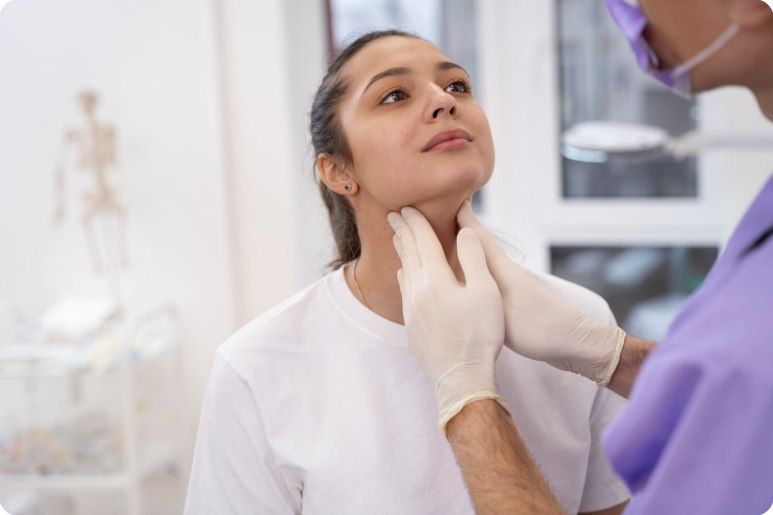
Diagnosis begins with a physical examination and palpation. An experienced doctor at Ap-denta clinic will always perform an inspection of the oral cavity to look for an odontogenic cause – this is the "gold standard." To confirm the diagnosis and rule out other pathologies (tumors, cysts), instrumental examination is prescribed: an ultrasound of the soft tissues of the neck and submandibular region with Doppler. This test allows assessment of the node's structure, size, presence of pus (fluctuation), and blood flow status.
Laboratory diagnostics include a complete blood count with leukocyte formula and ESR, as well as C-reactive protein (CRP) to assess the degree of inflammation. If a specific process is suspected, serological tests for HIV, hepatitis, and tuberculosis may be ordered. In complex cases where lymphadenitis does not respond to standard therapy, a fine-needle aspiration biopsy (FNAB) is performed for cytological examination to rule out oncological concerns.
Effective Treatment Methods and 2026 Protocols
Treatment for submandibular lymphadenitis is always etiotropic, meaning it targets the primary source of infection. Conservative therapy is effective in the serous stage. At Ap-denta clinic, we apply a comprehensive approach: broad-spectrum antibiotics (protected aminopenicillins or II–III generation cephalosporins), taking into account the local resistance patterns of flora in the Alicante region. The course duration is strictly 7–10 days. Additionally, non-steroidal anti-inflammatory drugs (NSAIDs) are prescribed to relieve pain and swelling, along with antihistamines to reduce the body's sensitization.
Local treatment includes antiseptic mouth rinses (chlorhexidine or Burow's solution) and physiotherapy: UHF therapy, laser therapy, or electrophoresis on the inflamed area. It is crucial to note that heating the lymph nodes without a doctor's prescription is strictly contraindicated, as it can accelerate the purulent process. If an abscess forms, surgical treatment is indicated: in a minor operating room under local anesthesia, the node is incised, pus is evacuated, and the wound is drained. Once acute symptoms subside, procedures to promote the resolution of tissue inflammation are prescribed.
Prevention and the Role of Torrevieja's Climate
Prevention of lymphadenitis primarily involves the elimination of chronic infection foci. Given that the main cause is odontogenic, it is necessary to visit the dentist for preventive check-ups at least twice a year. Timely treatment of caries, removal of tartar, and maintaining good oral hygiene are essential. For patients with chronic tonsillitis, irrigation of the tonsillar crypts and supporting local immunity are recommended.
Interestingly, the climate of Torrevieja (warm sea, dry air) is generally favorable for recovery. The high level of insolation contributes to vitamin D production, and the sea air improves the local immunity of the respiratory tract mucous membranes. However, there are nuances: sudden temperature changes (air conditioning vs. outdoor heat) can trigger exacerbations of ENT diseases, so it's important to avoid chilling during the summer heat. Maintaining adequate hydration is also critical to prevent congestion in the lymph nodes.
Conclusion from the Specialists at Ap-denta Clinic in Torrevieja
The doctors at Ap-denta dental clinic strongly advise against ignoring enlarged lymph nodes under the jaw. Even if you only notice a small "lump" without any discomfort, it could be a sign of chronic inflammation at a tooth root. We perform a complete diagnosis using orthopantomography (OPG) and ultrasound, allowing us to pinpoint the cause accurately. Treatment in Spain must adhere to European protocols, and we guarantee this approach. Remember: purulent lymphadenitis is treated only surgically, so do not let it reach an advanced stage. Book an appointment at Ap-denta for a preventive check-up and take care of your health!