
Prosthetics & Orthotics in Torrevieja Spain
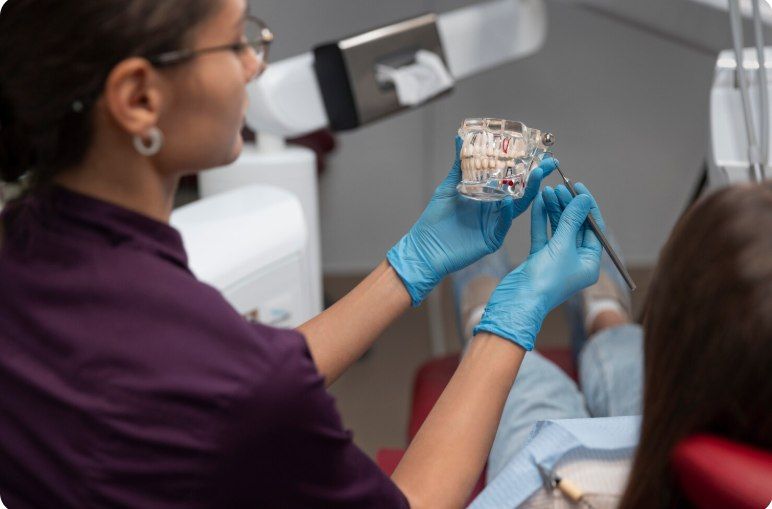
Dental Prosthetics in Torrevieja
A dental prosthesis replaces missing teeth and restores chewing function, speech, and a natural-looking smile. It's the final stage of oral rehabilitation — the step that follows treating decay, removing teeth that can't be saved, or bringing gum disease under control. Losing teeth isn't just a cosmetic matter: it makes chewing harder, puts extra strain on the teeth that remain, and over time shifts the bite and lets the jawbone in that area shrink.
At AP-Denta we work with three types of prosthesis — removable, fixed, and implant-supported hybrid — depending on the case. The process always follows the same path: a clinical assessment, digital CAD-CAM design, a fitting stage, and final delivery; each step is set out further down the page.
Why patients trust AP-Denta
in Torrevieja and the Costa Blanca
a well-maintained fixed prosthesis
after extraction
We design every prosthesis using CAD-CAM technology, for a more precise fit and a more predictable result — whether it's fixed, removable, or an implant-supported hybrid.
AP-Denta serves the whole Costa Blanca. Most towns are within an hour's drive, and free parking is available right outside the clinic.
We welcome patients from:
Advantages of a well-made prosthesis
For your mouth
- Restores chewing function without overloading the teeth that remain
- Stops neighbouring teeth drifting into the gap
- Slows down bone loss in the area where teeth are missing
- Restores natural speech — a well-fitted prosthesis settles in within a few days
On aesthetics
- With zirconia or lithium disilicate (E-Max), the result is practically indistinguishable from a natural tooth
- Locator or attachment retention systems on implants are more stable and less visible than traditional metal clasps
- CAD-CAM design means the same final fit, with greater precision
Types of prosthesis we provide
Removable prosthesis Comes out
Can be complete (when all the teeth are missing) or partial (when natural teeth remain), built in acrylic or on a cobalt-chromium framework. It can also be conventional — ready 8 to 12 weeks after the gum has healed — or immediate, fitted the same day as extraction as a temporary solution. An immediate denture means you're never without teeth during healing, but because the bone and gum keep shrinking over that period, it usually needs more adjustments before it settles. Locator or attachment retention systems on implants replace traditional metal clasps, for a result that's more stable and less noticeable.
Fixed prosthesis Stays in
Metal-ceramic crowns, all-ceramic crowns in lithium disilicate (E-Max) or zirconium oxide, and bridges cemented onto prepared teeth. Also implant-supported crowns and bridges (an implant-supported prosthesis), fixed through osseointegration once the implant has healed.
Implant-supported hybrid prosthesis On implants
Combines metal-acrylic, metal-ceramic, zirconia-ceramic, or PEEK, fixed onto 4 to 6 implants via a metal bar. The patient never takes it out — more stability and biocompatibility than a conventional removable prosthesis. It does call for stricter daily oral hygiene than natural teeth, to stop plaque building up around the implants.
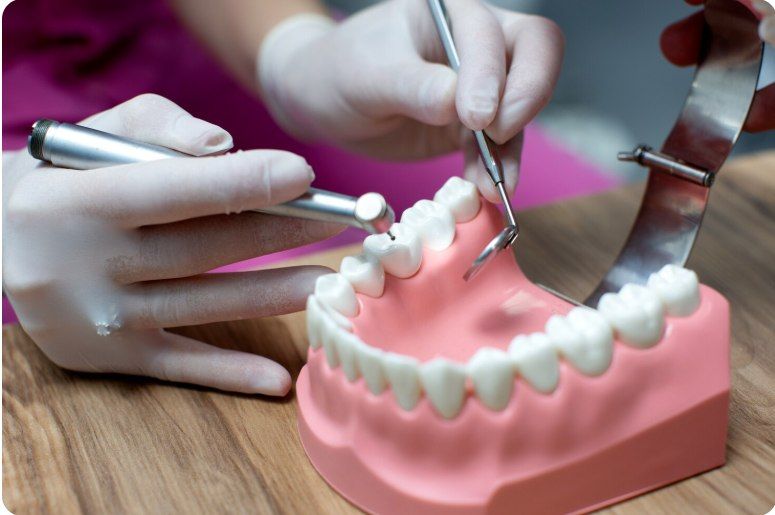
Materials: aesthetics and durability
The choice of material depends on where in the mouth it's needed, the chewing load it has to bear, and the aesthetic result you're after. Beyond what's summarised in the table, prosthodontics also draws on titanium (highly biocompatible, typically used in abutments and implant structures), porcelain as an aesthetic layer over metal or zirconia, resin for removable denture bases, and, in specific cases, alumina cores to reinforce crowns with particularly demanding aesthetic requirements.
| Material | Aesthetics | Durability | Recommended use |
|---|---|---|---|
| Zirconia | Very high | High | Front crowns and bridges |
| Lithium disilicate (E-Max) | Very high | High | Individual aesthetic crowns |
| Metal-ceramic | Medium | High | Back crowns and bridges |
| Cobalt-chromium | Low | High | Partial denture frameworks |
| Acrylic | Medium | Medium (renew every 2 years) | Partial or complete removable dentures |
| PEEK | Medium | Very high | Implant-supported hybrid prostheses |
How we choose the right prosthesis
-
Assessment and diagnosis
Clinical examination, imaging (a panoramic X-ray or a 3D CT scan where needed), and a review of your preferences as a patient.
-
Digital CAD-CAM design
The treatment plan is designed with digital precision, matched to the real anatomy of your mouth.
-
Preparatory work
Where needed, any decay, gum disease, or extractions are dealt with first.
-
Taking records
Impressions or a digital scan of your mouth, used to build the prosthesis to measure.
-
Try-in and adjustment
The prosthesis is tried in before final delivery, adjusting shape, colour, and bite.
-
Delivery and maintenance
Regular check-ups to monitor the fit and the health of the supporting teeth or implants.
Prosthesis or implant?
Where it's possible, an implant can replace a removable prosthesis or a conventional bridge, without needing to prepare the neighbouring teeth or rest on the gum. The upfront cost is usually higher, but the feel is closer to a natural tooth. Not every patient is a candidate — bone density and gum health are assessed at the consultation, where we'll tell you plainly which option suits your case.
Cost of treatment
The final price depends on the type of prosthesis, the material chosen, and whether the mouth needs preparing first (extractions, periodontal treatment). As a general guide, implant-supported hybrid and fixed prostheses tend to start at a higher upfront cost than removable ones, but also last longer when well looked after. At the consultation you'll receive a treatment plan with the cost broken down.
| Treatment | What's included | Price |
|---|---|---|
| Initial consultation (1 hour) | Examination, imaging review, treatment plan | €30 |
| Complete removable prosthesis (acrylic) | Per arch | add price |
| Partial removable prosthesis (skeletal) | Cobalt-chromium framework | add price |
| Zirconia crown | Per unit | add price |
| Metal-ceramic crown | Per unit | add price |
| Fixed bridge | Per unit | add price |
| Implant-supported hybrid prosthesis | Per arch, 4–6 implants | add price |
Rows marked "add price" are placeholders — replace them with your current fees before this goes live.
Frequently asked questions
How long does a dental prosthesis last?
It depends on the material and the type: a fixed prosthesis in zirconia or lithium disilicate can last more than 10 years with good care. Acrylic removable dentures are usually renewed every 2 years as the artificial teeth wear down.
What's the difference between a fixed and a removable prosthesis?
A fixed prosthesis is cemented onto teeth or implants and isn't removed by the patient. A removable one is taken out for daily cleaning and rests on the gum or on implants via retention systems such as locators or attachments.
How many implants do I need for a hybrid prosthesis?
Generally between 4 and 6, depending on the jaw and the available bone density. The prosthesis is fixed onto a metal bar and isn't removed by the patient, unlike a removable overdenture.
Does a prosthesis show when you speak or smile?
With materials such as zirconia or lithium disilicate, the result is practically indistinguishable from a natural tooth. With a well-fitted removable prosthesis, speech settles within a few days.
How long does it take to make a dental prosthesis?
A conventional fixed prosthesis usually takes 2 to 4 weeks, including CAD-CAM design and the final fit. Immediate prostheses can be fitted within 24–48 hours of extraction, as a temporary solution.
Visit us
| Address | Torrevieja, Pasaje País Vasco, edificio 1, local 4 |
| Phone | +(34) 638 893 141 |
| +(34) 638 893 141 | |
| apdenta@gmail.com | |
| Hours | Monday to Friday, 10:00–20:00, by appointment |
We welcome patients from Torrevieja, La Mata, Elche, Alicante, Murcia and the rest of the Costa Blanca and the Vega Baja.
Call to book a consultationContact Information:
| Torrevieja, Pasaje Pais Vasco, edificio 1 local 4 | |
| +(34) 638 893 141 | |
| +(34) 638 893 141 | |
| apdenta@gmail.com | |
| Working hours: Mon - Fri: from 10:00 to 20:00 |