
Dental Crowns in Torrevieja
Table of Contents
- Advantages of metal-free crowns
- Fabrication of E-Max crowns
- How long does it take to fabricate a crown?
- Preparation for E-Max crown placement
- How much tooth reduction is required for a crown?
- Which is better: E-Max or zirconia crowns?
- How to care for E-Max ceramic and zirconia crowns
A crown is a "cap" that covers the tooth on all sides, restoring its anatomical form and protecting it from further breakdown.
Crowns are placed with the aim of:
- protecting the tooth from fracture following endodontic treatment (devitalisation);
- restoring the function, form and aesthetics of a tooth that has already been damaged.
Metal-ceramic and full-metal crowns are more commonly placed in the posterior regions, where aesthetics are of lesser importance, as the presence of a metal substructure frequently causes discolouration of the gingival tissue and can occasionally give rise to allergic reactions. In view of these shortcomings, such crowns are fabricated at our clinic only in exceptional cases and under strictly defined indications.
We prefer to offer our patients the most advanced technology available — metal-free crowns: E-Max ceramic crowns (lithium disilicate) or zirconia crowns (zirconium dioxide).
Advantages of Metal-Free Crowns:
- Aesthetics. They do not contain a dark metal substructure, as is the case with metal-ceramic restorations. They are more translucent and therefore more aesthetically pleasing, closely resembling a natural tooth. This is of particular importance when restoring the anterior teeth.
- Biocompatibility. No allergic gingival inflammation arises around the restored tooth, as the materials used are fully biocompatible.
- Precision. Fabricated using digital technologies, which allows an exceptionally high level of accuracy to be achieved, enabling the creation of a correct anatomical form and ensuring proper occlusion and comfort during chewing.
- Reliability. E-Max crowns are adhesively bonded — that is, they are cemented using a specialised composite resin — which virtually eliminates the possibility of crown debonding and reduces the risk of secondary decay developing beneath the crown.
- Strength. The crowns have a monolithic construction; the flexural strength of lithium disilicate is 470–530 MPa, which is comparable to that of steel.
- Longevity. With appropriate care, the crowns last in excess of 15 years whilst retaining their original properties and appearance. This is one of the best performance figures among dental prostheses.
Fabrication of E-Max Crowns (read more)
3D Dental Scanning (read more)
How Long Does it Take to Fabricate a Crown?
Depending on the complexity of the clinical situation, the fabrication and placement of a crown takes on average approximately 10 working days and requires 2 to 3 appointments: tooth preparation, trial fitting and final cementation. Where one or more teeth in the anterior region need to be restored and exceptional aesthetics are required, additional appointments for shade and form adjustment may be necessary, in which case the timescale may be extended.
Preparation for E-Max Crown Placement
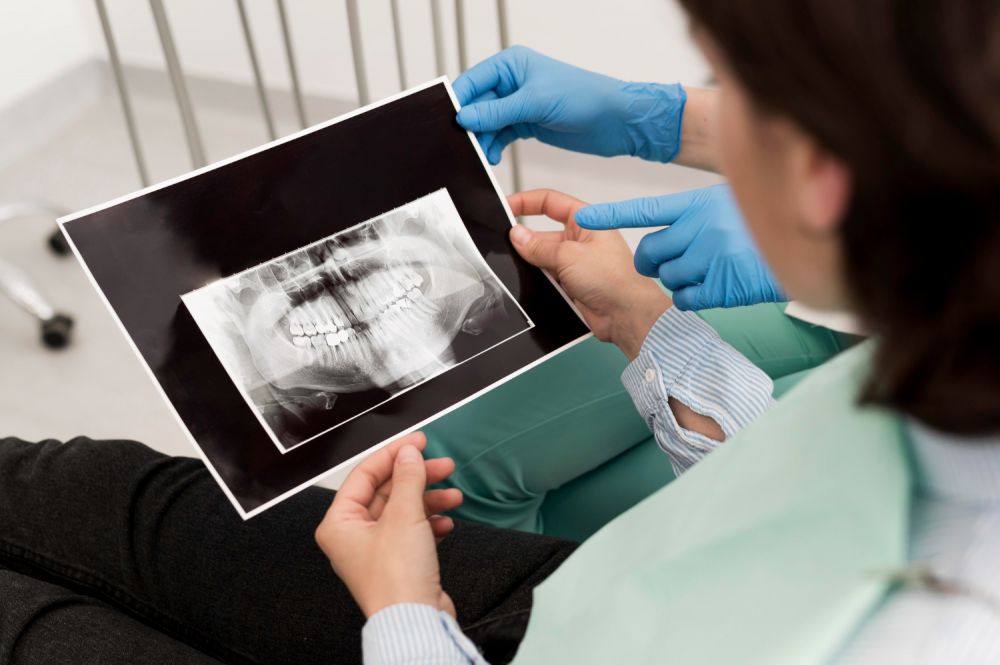
Prior to placement, diagnostic assessment, treatment planning and preparatory work must be carried out. The specialist who plays the primary role in crown placement is the prosthodontist. They carry out the clinical assessment, evaluating the condition of the dental arches, the temporomandibular joints and the overall facial parameters, and formulate the treatment plan. Before crowns can be placed, the oral cavity must first be brought to a healthy baseline:
- Professional hygiene must be carried out, with removal of plaque and calculus.
- All decay, its complications and any chronic foci of infection must be treated.
- Gingival inflammation must be resolved.
- Broken-down teeth must be extracted.
- The integrity of the dental arch must be restored by means of implant placement.
- Crown placement itself is then carried out either concurrently with, or following the completion of, all other treatment.
How Much Tooth Reduction is Required for a Crown?
Since metal-free crowns do not contain a metal substructure, they are thinner, and consequently less tooth tissue needs to be reduced than is the case with metal-ceramic crowns.
Which is Better: E-Max or Zirconia Crowns?
Both types of metal-free crown are used for the restoration of both posterior and anterior teeth. When comparing E-Max and zirconia crowns, it can be said that they are broadly equivalent in terms of quality and price point. There are, however, certain nuances. For example, E-Max crowns offer superior strength, yet for certain types of tooth destruction, zirconia crowns are the recommended option.
It is therefore advisable to select the type of crown only following a consultation with the dentist, who will carry out a full clinical examination and diagnostic assessment in order to determine the most appropriate prosthetic solution.
How to Care for E-Max Ceramic and Zirconia Crowns
- In general, care for crowns does not differ from care for natural teeth. Brushing should be carried out in the morning after breakfast and in the evening after dinner.
- A soft-bristled toothbrush and a non-abrasive toothpaste are recommended, in order to avoid damage to the gingival tissue and prevent gingival recession, whilst still ensuring thorough and gentle cleaning.
- Cleaning should be performed using sweeping and circular movements directed away from the gum, as though drawing it over the crown.
- Additional use of an oral irrigator, interdental brushes and dental floss is recommended.
- Following crown placement, the dentist should be visited for routine check-ups once every 6 months. Should any discomfort, gingival inflammation or unpleasant sensations arise, a dental appointment should be arranged promptly.
What is better: metal-ceramic or metal-free ceramic? Read our article.
We invite residents of Torrevieja, La Mata, Elche, Murcia, Alicante and other towns along the Costa Blanca and in the Valencia region to visit our clinic or to give us a call. CALL US: +(34) 638 893 141. Appointments are by prior arrangement only.
Contact Information:
| Torrevieja, Pasaje Pais Vasco, edificio 1 local 4 | |
| +(34) 638 893 141 | |
| +(34) 638 893 141 | |
| apdenta@gmail.com | |
| Working hours: Mon - Fri: from 10:00 to 20:00 |