

All on 4 dental implantation in Torrevieja (Alicante)
-
What is All-on-4
-
Treatment stages at AP-Denta
-
Advantages of treatment at AP-Denta
-
Treatment costs
-
Saving on implant treatment
-
Advantages of All-on-4 implantation
-
Who is suitable for All-on-4
-
When All-on-4 may not be suitable
-
Alternative method: All-on-6
-
Step-by-step All-on-4 protocol at AP-Denta
-
Permanent prosthesis options
-
Frequently asked questions
-
Warranties
What is All-on-4
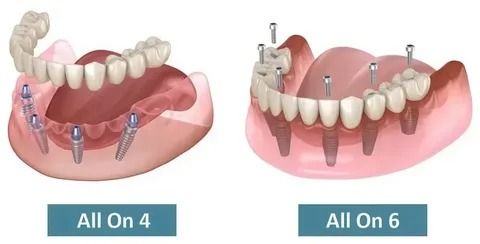
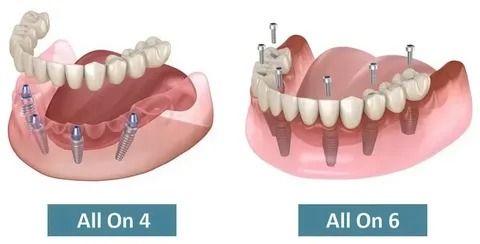
All-on-4 is a fixed implant solution for cases of complete tooth loss. Just four implants are placed in strategic positions in the jaw, and a temporary prosthesis is secured on the same day as the surgery.
Advantages of the method:
-
Suitable for patients who have been without teeth for an extended period
-
Often allows bone grafting to be avoided
-
The prosthesis is fitted on the day of surgery
The technique was developed by Nobel Biocare (Switzerland) and has been successfully used for over 20 years.
Treatment Stages at AP-Denta
1. Consultation and CT scan
We carry out a full diagnostic assessment and draw up a personalised treatment plan.
2. Surgical stage and placement of the temporary prosthesis
On the day of surgery, the implants are placed and the temporary prosthesis is fixed in position.
3. Placement of the permanent restoration after 6 months
The final prosthesis is fabricated and fitted, adapted to your individual occlusion.
All stages follow the original Nobel Biocare protocol.
Advantages of Treatment at AP-Denta
-
We work in Torrevieja, Alicante exclusively with original Nobel Biocare implants and components
-
All experienced specialists work as a coordinated team: oral surgeon, prosthodontist, and dental technician
-
We use digital planning and CAD/CAM technologies
-
Russian-speaking doctors and staff
-
Step-by-step treatment plan with clear and transparent terms
-
We operate as a fully registered official practice
Treatment Costs
Following your initial consultation and CT scan, you will receive:
-
A personalised treatment plan
-
All available options
-
A detailed cost breakdown with no hidden charges
What is included in the base cost:
-
Digital treatment planning
-
Placement of 4 original Nobel Biocare implants
-
Anaesthesia, surgical kit, and sutures
-
Fabrication and placement of the temporary prosthesis on the day of surgery
-
Post-operative review appointment and suture removal
-
Permanent prosthesis (after 6 months)
Charged separately:
-
Tooth extraction (if required)
-
Oral preparation (scaling, caries treatment, etc.)
Price ranges:
-
4 Nobel Biocare implants + temporary prosthesis + permanent acrylic/composite prosthesis: from €7,000 to €10,000
-
4 Nobel Biocare implants + temporary prosthesis + CAD/CAM zirconia prosthesis: from €11,000 to €14,000
The final cost depends on the chosen material. All payment options are discussed in detail during the consultation.
Saving on Implant Treatment
All-on-4 treatment following the original protocol, including a temporary prosthesis, cannot cost less than €4,000. Lower prices are typically associated with:
-
Use of non-original components
-
Absence of digital planning
-
Simplified protocols and short-lived materials
Such "savings" can lead to complications, prosthesis fractures, implant failure, and the need for repeat surgery and additional costs.
Advantages of All-on-4 Implantation
Unrestricted chewing function
The prosthesis is securely fixed, allowing you to eat your favourite foods without limitation.
Confidence in everyday life
You can speak, smile, and exercise freely, without restriction or self-consciousness.
Maximum comfort
There is no need to remove the prosthesis, use adhesives, or special cleaning agents.
Preservation of facial contour
Implants transmit load to the bone, preventing its atrophy and maintaining the necessary support for the facial muscles.
Fewer surgical interventions
The method frequently allows bone grafting to be avoided.
Rapid recovery
The temporary prosthesis is secured on the day of surgery — you are never left without a dental arch.
Who is Suitable for All-on-4
-
Complete absence of teeth on one or both jaws
-
Remaining teeth that require extraction
-
Mobile teeth due to advanced periodontitis
-
Contraindications to bone grafting
-
Contraindications to placement of 6–8 implants
-
Discomfort with removable dentures
The method is particularly well suited to older patients — it is less traumatic and requires a shorter recovery period
When All-on-4 May Not Be Suitable
The method may have limitations in cases of:
-
Serious systemic conditions (e.g. uncontrolled diabetes, active-stage oncology, osteoporosis)
-
Significant anterior bone loss
-
Excessively low bone density in the upper jaw
-
Younger age and good bone volume — in such cases, All-on-6 or conventional implantation may be more appropriate
Alternative Method for Edentulous Jaws: All-on-6
What is it
In the All-on-6 technique, six implants are placed in the jaw — three on each side. The additional supports distribute the load more evenly than in All-on-4, enabling the system to withstand greater masticatory forces. A durable zirconia or titanium-zirconia bridge is often fixed immediately.
When All-on-6 is chosen
-
The bone in the molar region has low density or is thin
-
There is significant load from bruxism (teeth grinding during sleep)
-
The diet includes a lot of hard foods — nuts, steaks, etc.
-
It is important to minimise the risk of prosthesis fracture even under high load
Benefits for the patient
-
Maximum mechanical reliability
-
A permanent fixed prosthesis can often be placed immediately
-
The framework lasts as long as the implants — 20 years or more
The difference from All-on-4
The key distinction is two additional implants. This provides greater stability and more even load distribution across the system.
Other prosthetic options for edentulous jaws
-
Conventional removable denture
-
Removable denture on locators (press-stud attachments)
-
Bar-retained removable denture
-
Fixed prosthesis on 8 implants
Summary
The more supports, the more stable and long-lasting the construction. All-on-6 is particularly well suited to patients who want a reliable fixed prosthesis, plan to eat without restrictions, and have sufficient bone volume for all implants to be placed.
Expert comment
"All-on-4 in Torrevieja (Alicante) is the optimal solution for older patients with moderate bone volume or a limited budget. However, for patients with an active lifestyle and good general health, implantation on 6 or 8 implants is worth considering — it provides better stability and reliability for years to come."
Step-by-Step All-on-4 Protocol at AP-Denta
1. Diagnostics and preparation
-
CT scan of the jaws, laboratory tests, clinical examination
-
Treatment stage planning and material selection
2. Digital planning
-
3D treatment planning
-
Preparation of the surgical guide and temporary prosthesis
3. Surgery
-
Tooth extraction (if required)
-
Implant placement
-
Placement of the temporary prosthesis on the day of surgery
4. Follow-up appointments
-
Suture removal
-
Scheduled review appointments (included in the cost)
5. Permanent prosthesis after 4–6 months
-
3D scanning
-
Selection of the prosthesis type (acrylic, composite, zirconia)
-
Placement of the final restoration
Permanent Prosthesis Options
-
Acrylic — lightweight, cost-effective, with good load distribution
-
Composite — highly aesthetic, more wear-resistant
-
Zirconia — strong, durable, with premium aesthetics
The choice depends on the clinical situation, aesthetic requirements, and budget. Your clinician will help you select the most appropriate option.
Frequently Asked Questions
How long does healing and osseointegration take?
Healing begins around day 4. During the first week, pain, swelling, and bruising are possible. Antibiotics and anti-inflammatory medications are prescribed, along with post-operative guidance. Most patients feel noticeably better after one week. Full osseointegration of the implant with the bone takes 5–6 months.
Will my speech change after implant-supported prostheses are placed?
Yes, initially some sounds may be more difficult to produce. Adaptation and full restoration of speech typically takes up to 2 months.
When can I eat hard food?
-
0–3 weeks: soft foods only — purées, porridge, yoghurt, blended soups, pâtés
-
2 weeks – 6 months: soft solid foods — pasta, soft bread, cottage cheese, omelettes, tender meat or boneless fish. Hard foods (raw carrots, apples, nuts, tough meat) must be avoided to protect the implants
-
After 2–3 weeks, firmer foods may be gradually introduced, cut into small pieces
With a permanent prosthesis, the following are permanently prohibited: bones, cartilage, nuts, unshelled seeds, hard crusts, toffees, brittle candy, heavily charred meat.
Is it painful to wear the prosthesis after tooth extraction?
Yes, as with any surgical procedure. Pain subsides as healing progresses. Your clinician will prescribe pain relief to ensure your comfort.
Is All-on-4 suitable when there is insufficient gum tissue?
Yes, but gingival grafting may be required to protect the implant and improve osseointegration.
Can All-on-4 be placed on both jaws at the same time?
Yes. This allows the bite and facial vertical dimension to be restored simultaneously, avoiding prolonged staged treatment.
How often do I need to see the dentist after All-on-4?
Your prosthodontist — every 6 months; dental hygienist — as recommended (typically 2–3 times per year). At check-up appointments, the prosthesis is removed for cleaning, fixings are checked, and an X-ray is taken once a year.
How long do All-on-4 implants last?
With good oral hygiene and no serious systemic conditions — 10 years or more, sometimes for life.
Lifespan of All-on-4 prostheses:
-
Temporary acrylic prosthesis — up to 6 months
-
Permanent acrylic prosthesis on a titanium framework — 5–7 years
-
Permanent composite prosthesis — 7–10 years
-
Permanent zirconia prosthesis — 10–15 years or longer
What reduces the service life: poor oral hygiene, bruxism, smoking, uncontrolled diabetes, and infrequent dental visits.
Does food get under the prosthesis?
A small amount can — this is normal. If it is excessive, adjustment or prosthesis relining may be required.
Is any preparation required before All-on-4?
Only standard preparation: professional oral hygiene, treatment of caries and gum disease, and extraction of non-restorable teeth.
Is special care required for the implant?
Yes. In addition to brushing and toothpaste, the gum margin must be cleaned daily using floss, interdental brushes, and a water flosser.
Why are original implants and components important?
They are precisely matched to the system, reducing the risk of inflammation, mechanical failure, and implant loss. Non-original components can cause micromovement, screw loosening, fractures, and other complications.
Warranties
-
Lifetime manufacturer’s warranty on the implants
-
Clinic warranty — 2–5 years
-
Free implant replacement in the event of rejection within one year
-
Implant passport with full product data
To maintain the implant warranty — clinical reviews twice per year, professional oral hygiene, and scheduled prosthesis maintenance.
Contact Information:
| Torrevieja, Pasaje Pais Vasco, edificio 1 local 4 | |
| +(34) 638 893 141 | |
| +(34) 638 893 141 | |
| apdenta@gmail.com | |
| Working hours: Mon - Fri: from 10:00 to 20:00 |